Ever get bored on flights? It’s becoming less common due to in-flight Wi-Fi, but I’ve recently heard about a strategy that some people are using to be more productive at work while traveling.
The idea is to book a long-haul flight to tackle those tasks that require deep focus and minimal distractions (apart from the occasional drink service). This strategy works particularly well for tasks like writing or brainstorming, where being offline is actually an advantage.
Right now, I find myself on an 8.5-hour journey to Chicago—perfect time to write a short guide and catch up with my audience.
It’s been a while, and there’s some important information you need to know if you want to grow your technology business.
Over the last few years, the marketing landscape has changed dramatically. Tactics that used to work have been thrown out the window.
For example, video marketing was a major trend, and I saw many businesses in the industry gravitate towards it. Back in its heyday (2018-2020), a short video could reach thousands of business contacts on LinkedIn.
But then, the algorithms changed, and as more people jumped on the video marketing bandwagon, its effectiveness diminished.
This cycle has always existed in marketing: a tactic works well, then gets overused, and attention shifts elsewhere.
You might be wondering, how often does this happen? And how can you create a lead generation system in your business that stands the test of time?
The reality is, you can’t. Things change, and like nature, you have to adapt or risk falling behind.
There’s another reason for this flight: I’ve been asked to speak at a conference in Las Vegas—ScaleCon. It’s a conference focused on growth strategies for MSPs (Managed Service Providers).
I thought it was the perfect time to revise my marketing approach, learn from industry veterans, and see what’s working for them in terms of lead generation.
I’ll share with you one tactic that I know is working right now, based on my experience and the insights I’ll gain from the conference.
But for now, let’s get back to Chicago.
My dad lives in a northwest suburb called Palatine. As a kid, I used to visit him every summer and attend day camps. Though I live in Scotland now, I’ve always had a divided focus between both sides of the Atlantic.
When I was younger, I loved visiting the U.S. because of the food—I couldn’t get enough of it. Slowly, the UK has adopted more American food options, but there are still things I look forward to when I visit.
For example, the iconic beef combo with hot peppers. For my UK readers, this is essentially a roast beef sandwich with spicy Italian sausage, dipped in a rich beef gravy. Nothing quite compares to it.

As you can probably tell, the in-flight meal hasn’t been served yet, and I’m getting hungry! 🙂
Before the jet lag and the beer kick in, let me outline what we’ll be covering in this post.
One of the first things I ask any new client at IT Rockstars is how they’ve grown their business. How did they acquire new clients? 99% of the time, I get the same answer: word of mouth or referrals. Rarely do I hear MSPs say they got new clients through marketing.
I can relate to this. When I ran my own MSP, nearly all my clients came from referrals. We did some marketing, but only one or two clients came in that way. Referrals were, and still are, the best source of new business.
There are several reasons for this:
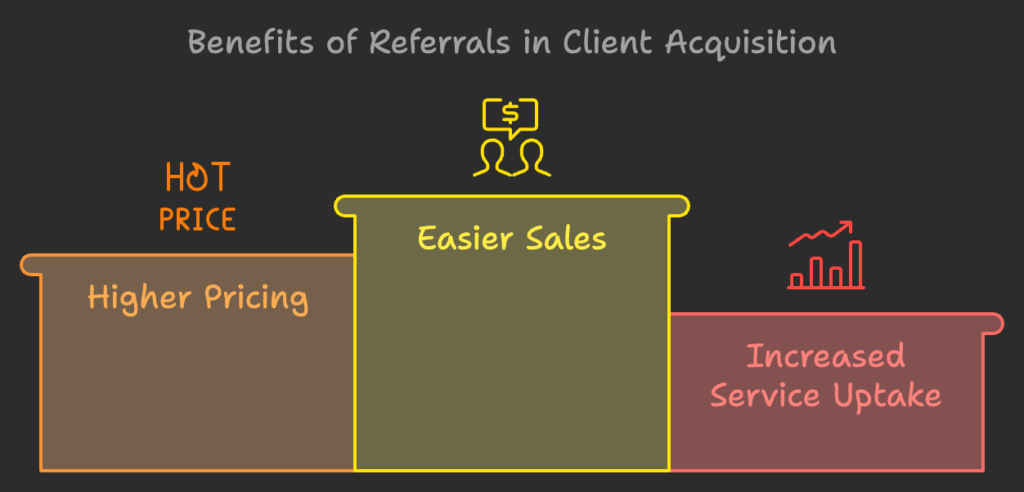
1) Referrals are easier to sell to because they come through a recommendation.
2) You can command a higher price because of the trust established through the recommendation.
3) Referrals tend to buy more services, again due to the trust factor.
But how do you scale referrals? Referrals rely on relationships, and relationships take time to build.
The question then becomes: how can we scale relationship-building? Sure, there are networking events like BNI, Chamber of Commerce, and masterminds, but these aren’t scalable. Most MSPs I speak with want to close at least one or two new clients per month.
You need a consistent, predictable lead source.
One of the best ways to scale relationship-building is through webinars.
Webinars allow you to capture the attention of your ideal prospects for 20-30 minutes—something that’s hard to achieve at in-person events, where everyone is vying for attention. At a conference or networking event, you might be able to connect with 2-5 new people. But with a webinar, you can have 20-50 people all focused on you.
Many shy away from webinars because they feel it’s an overused channel or because they fear public speaking. But that’s precisely why webinars are so powerful. You get to control the narrative and have your audience’s undivided attention.
Overcome the fear of presenting with practice. Most of us, including myself, initially dreaded public speaking, but it’s a skill you can develop.
Now, if I’ve convinced you about the value of webinars, let’s talk about some of the additional benefits.
First, not everyone will buy right away. In fact, when you first start, you’ll be lucky to get one or two follow-up appointments. What surprised me the most when I began was the low attendance rate. Even if you get a lot of sign-ups, only about a quarter will actually show up.
But there’s still a benefit here. If you promote a webinar well and get 200 sign-ups, only 50 might attend live. However, you’ve still captured 200 contacts that you can nurture and market to over time.
If you host monthly webinars, you could generate 2,400 new contacts in a year. Imagine having 600 people who know exactly who you are. Do you think you’d have success generating leads in your MSP?
Many MSPs believe lead generation is about making 200 cold calls a day. Yes, that can work, but it’s a much harder sell. Those leads don’t know who you are or the value you offer. I’d much rather nurture warm leads who are already familiar with what I do.
I’ll leave you with this: marketing is broad. What works for one business might not work for another. The key is attention, focus, persistence, and testing. Learn from your failures, and the quicker you take action, the quicker you’ll find success.
Our challenge here at IT Rockstars is “20 leads in 20 days,” but realistically, you need 90 days to see consistent results. Any marketing initiative needs at least 90 days before you can truly assess its effectiveness. Focus and testing are essential to building experience and achieving success.